
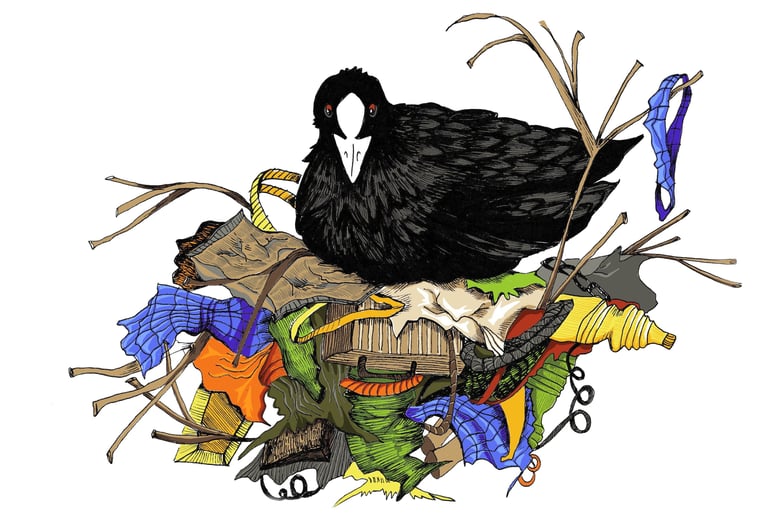
Dit dier is een meerkoet. Het is een watervogel die veel voorkomt op waterwegen in heel België. Meerkoeten zijn te herkennen aan hun witte snavel en het opvallende witte schild op hun voorhoofd. Ze leven op de kanalen van dichtbevolkte stedelijke gebieden en hebben hun aangepast aan het leven in een stad.
Meerkoet?
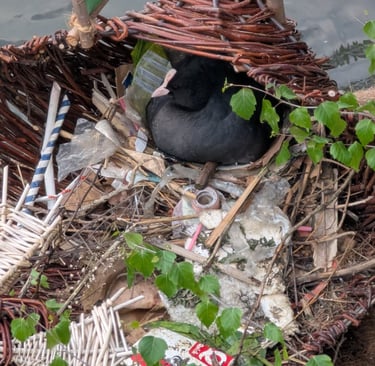
Meerkoeten verzamelen afval uit het water om hun nesten mee te bouwen.
Recent onderzoek toont aan
dat maar liefst 29,3% van het nestmateriaal van stedelijke meerkoeten bestaat uit kunstmatige materialen (1.634 van de 5.579 geregistreerde items). Sommige nesten bevatten zelfs meer plastic dan natuurlijke materialen! (Hiemstra, Gravendeel, Schilthuizen: 2021)
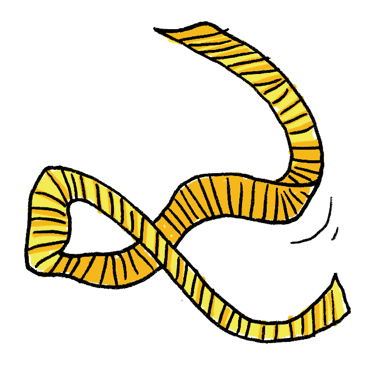


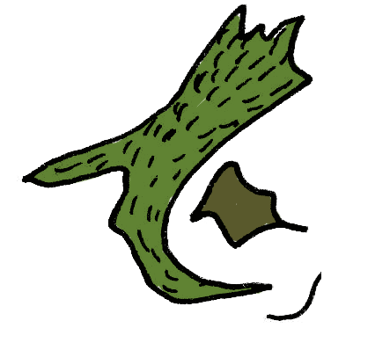
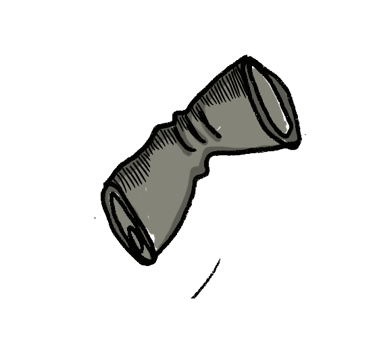



In het vroege voorjaar plaatsen we nestplatformen langs de lokale waterwegen. In steden vinden watervogels vaak moeilijk een veilige en geschikte plek om te broeden. Hun nesten kunnen wegspoelen door de golfslag van voorbijvarende boten of beschadigd raken door weersomstandigheden. Bij gebrek aan alternatieven bouwen vogels soms op ongeschikte locaties, zoals hoge constructies waar jonge kuikens na een val niet meer zelfstandig naar het nest kunnen terugkeren.
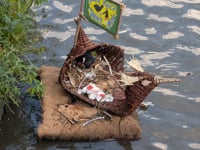
Tijdens het bouwen van hun nesten verzamelen meerkoeten ook steeds grotere hoeveelheden menselijk afval uit de kanalen, dat ze samen met organisch materiaal in hun nesten verwerken. Naast diverse plastic verpakkingen vinden ook materialen zoals touwen, karton en ronddrijvend textiel hun weg naar de nesten in aanbouw. Stilaan beginnen ze zich op hun gemak te voelen op de platformen — eerst als rustplek, en na een tijdje zien ze deze vaak als broedplaatsen en beginnen ze er hun nesten te bouwen. Naast meerkoeten zijn ook andere watervogels (eenden, futen, ...) van harte welkom om de platformen naar eigen behoefte te gebruiken.
Het menselijk afval dat door meerkoeten wordt verzameld en door ons uit de waterwegen wordt verwijderd, krijgt nu de kans om op een verantwoordelijke manier te worden gerecycled.


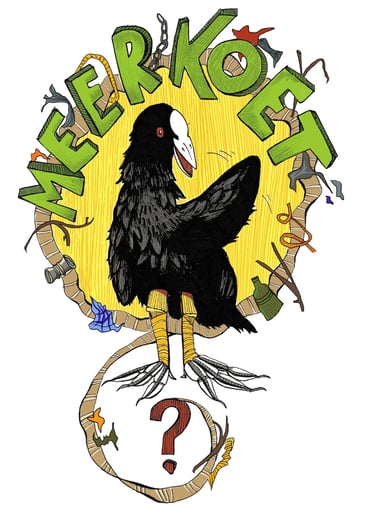
Hoe werken we samen met de meerkoet?
Samen met de meerkoet, zorgen we voor schoner water in onze steden, terwijl tal van watervogels toegang krijgen tot veilige nestplaatsen.

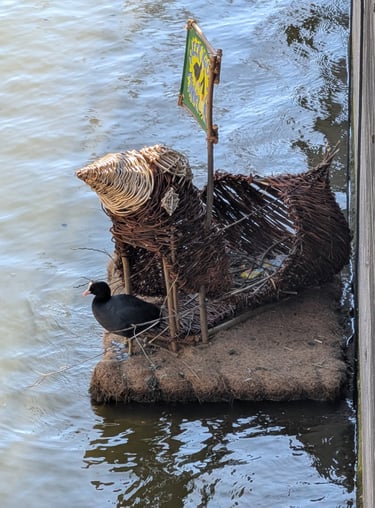
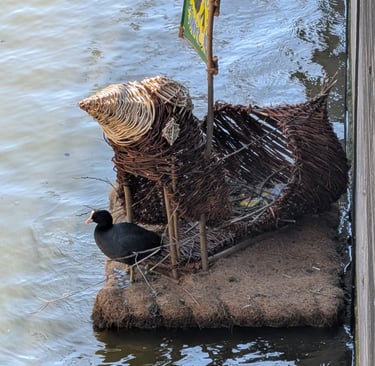
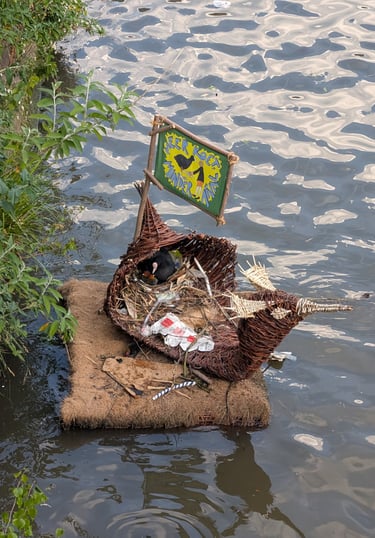

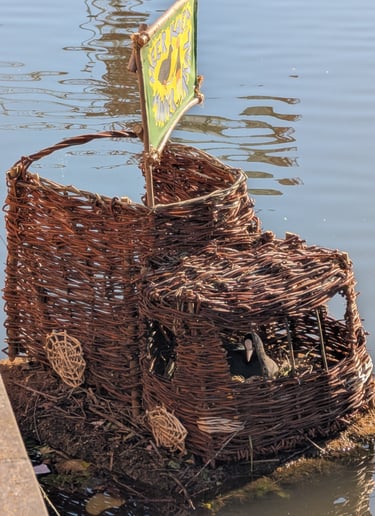
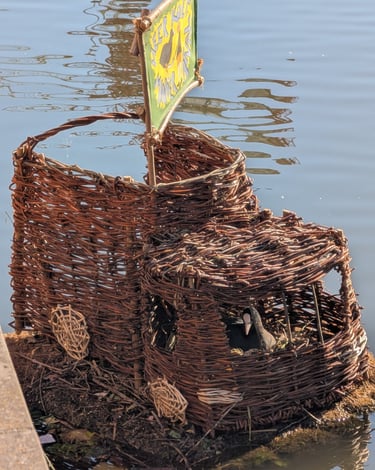
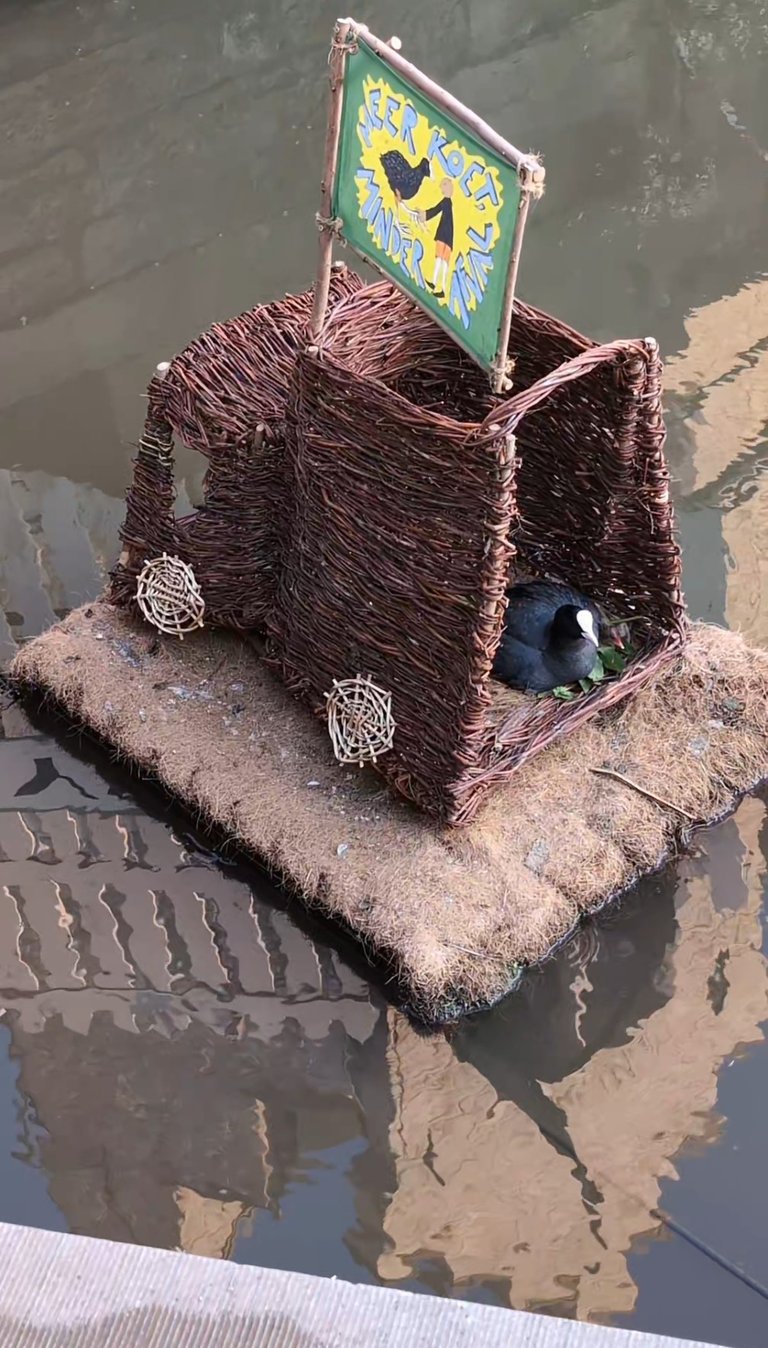
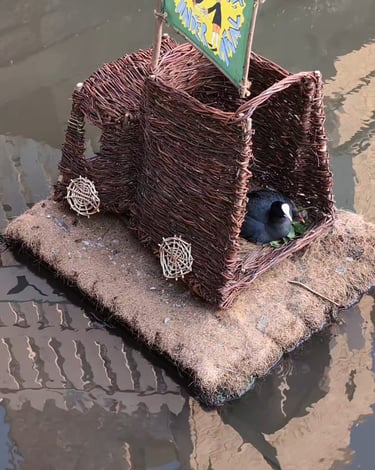
Na het broedseizoen, zodra de kuikens het nest hebben verlaten en uit zorgvuldige observatie blijkt dat de watervogels de platformen niet langer als broed- of rustplaats gebruiken, verwijderen we voorzichtig de neststructuren met het verzamelde menselijk afval. Zo voorkomen we dat het terug in de kanalen spoelt, waar het wordt afgebroken in microplastics en uiteindelijk in onze wereldzeeën verdwijnt.


Sinds het begin van de tweede editie van 'Meer Koet, Minder Afval' verspreiden we niet alleen drijvende platformen op de waterwegen, we plaatsen er ook handgeweven neststructuren voor diverse watervogels bovenop. Deze schuilplaatsen zijn geïnspireerd op het traditionele ambacht van het weven van eendenkorven. Ze worden in een traag proces geweven, samen met onze helpende handen waar we heel dankbaar voor zijn!


contact
jaron.vandevelde@telenet.be
meer.koet.minder.afval
Met dank aan











ida.bomm@posteo.de